Saturday, August 8, 2015

Pizza and Pages: Okay for Now by Gary D. Schmidt

Type of Book: Realistic

Plot Summary: When Doug Swietek moves to Marysville with his family, things aren't too great. He finds himself trying to deal with an abusive father and an injured older brother who's just returned from the Vietnam war. With the help of the deli owner's daughter, Lil and an artistic librarian named Mr. Powell, Doug tries to become at least okay...for now.

Average Teen Rating: 6.9
I adored this book and luckily, the teens liked it too. I was worried that it might be too much of a "quiet" book for them, but they praised the writing style and characters.

Discussion Questions: It wasn't difficult to find good discussion questions since this title seems perfect for book clubs. I found them from Houghton Mifflin, as well as here.

Pizza and Pages: The Last Dragonslayer by Jasper Fforde

Type of Book: Fantasy/Humor

Plot Summary: From Goodreads: "In the good old days, magic was indispensable—it could both save a kingdom and clear a clogged drain. But now magic is fading: drain cleaner is cheaper than a spell, and magic carpets are used for pizza delivery. Fifteen-year-old foundling Jennifer Strange runs Kazam, an employment agency for magicians—but it’s hard to stay in business when magic is drying up. And then the visions start, predicting the death of the world’s last dragon at the hands of an unnamed Dragonslayer. If the visions are true, everything will change for Kazam—and for Jennifer. Because something is coming. Something known as . . . Big Magic."

Average Teen Rating: 7.35
I wasn't sure how the teens would respond to this title since it's a lighter fantasy and they usually enjoy pretty dark, heavy stuff. But I think it ended up being a good choice for a summer read!

Discussion Questions: I found some great questions, courtesy of Houghton Mifflin.

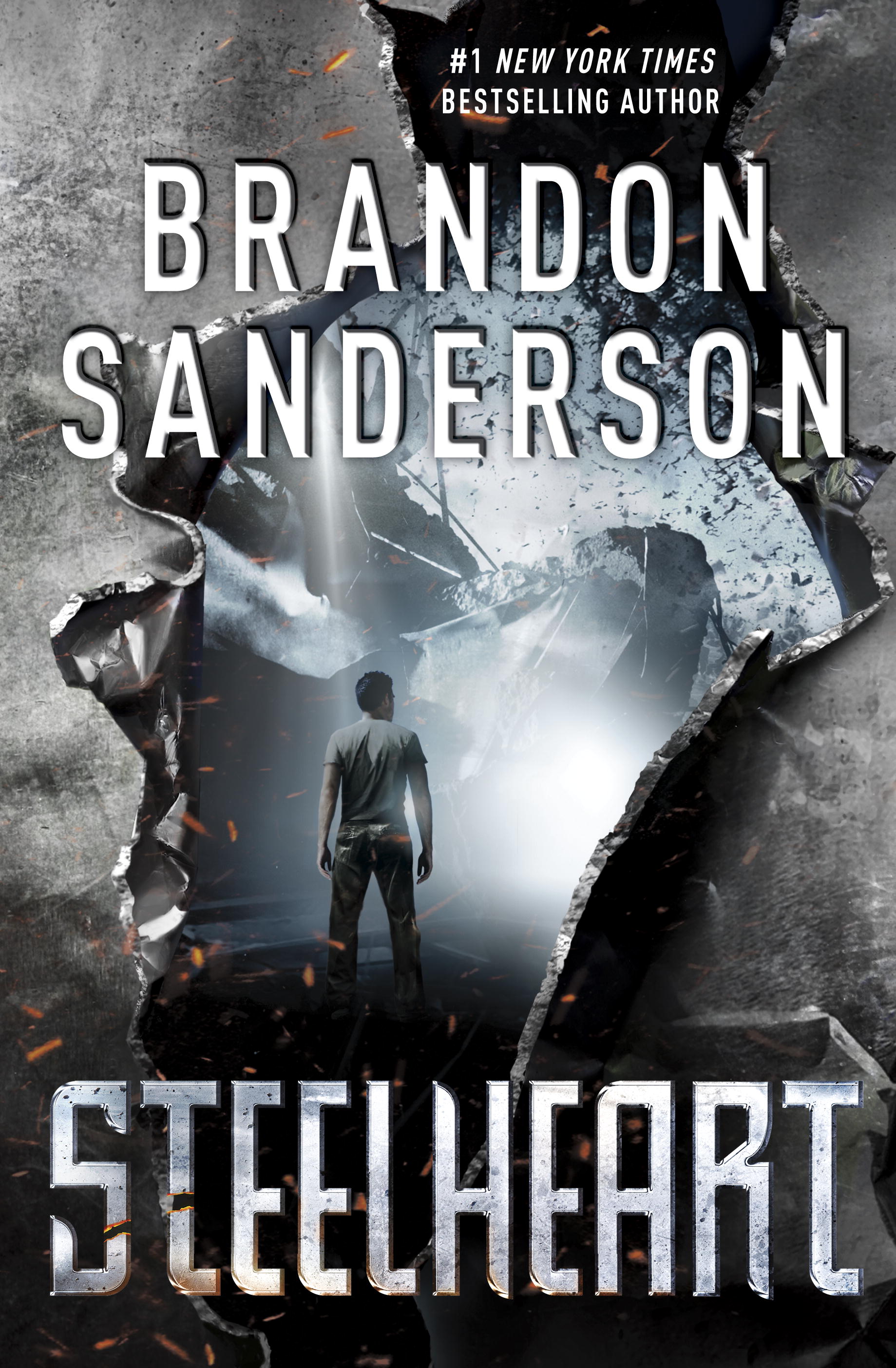
Pizza and Pages: Steelheart by Brandon Sanderson

Type of Book: Sci-Fi

Plot Summary: From Goodreads: "Ten years ago, Calamity came. It was a burst in the sky that gave ordinary men and women extraordinary powers. The awed public started calling them Epics. But Epics are no friend of man. With incredible gifts came the desire to rule. And to rule man you must crush his wills.

Nobody fights the Epics...nobody but the Reckoners. A shadowy group of ordinary humans, they spend their lives studying Epics, finding their weaknesses, and then assassinating them.

And David wants in. He wants Steelheart - the Epic who is said to be invincible. The Epic who killed David's father. For years, like the Reckoners, David's been studying, and planning - and he has something they need. Not an object, but an experience.

He's seen Steelheart bleed. And he wants revenge."


Average Teen Rating: 8.6
The teens really liked this one! They loved the action and the world-building. They didn't so much like the romance between David and Megan and that led into a great discussion about using romance in YA books in general. This is a great pick for teen book clubs.

Discussion Questions: 

  1. David’s main purpose for killing Steelheart is to avenge his father. Prof says to him “You’ve got a passion to kill, but you need more passion to live.” Is Prof right? Is David’s motive (revenge) misguided or not?
  2. Why do you think Calamity appeared? What do you think it is?
  3. In the story, scholars theorize that Epics were a new stage of human development or evolutionary growth. Do you agree? Or do you have another theory?
  4. Epics had a distinct, even incredible, lack of morals or conscience. That bothered some people, on a philosophical level. Theorists, scholars. They wondered at the sheer inhumanity many Epics manifested. Did the Epics kill because Calamity chose—for whatever reason—only terrible people to gain powers? Or did they kill because such amazing power twisted a person, made them irresponsible?
  5. Megan mentions that things will be worse with Steelheart gone b/c he in a tyrannical way, provided food, electricity, etc. What do you think about that?
  6. After Steelheart dies, what do you think happens to Newcago?
  7. In the Reckoners, everyone has their own role:the leader/manager, the techie, the researcher, the odd jobber, etc. What would you do if you were a part of the group? What job do you think is the most important/essential?
  8. Do you think people harvesting and selling the Epics mitochondria/blood for research purposes without them knowing is ethical? Why or why not?
  9. What do you think of Megan as a character? Is her attitude towards David justified? Did you guess she was an Epic early on or were your surprised?
  10. Why do you think that Prof and Megan were so hesitant to give in to their powers? How do you think it changes them?
  11. Do you think Prof accidentally killed his students?
  12. How far in the future do you think the story takes place?
  13. What do you think of the different book covers? Which one is better/more effective?
  14. What do you think happens in the sequel? Will you read it?

Wednesday, July 29, 2015

Fan Fiction & Flower Crowns: A Fandom Party for Teens!

If you work with teens, you've probably also heard them fervently talk about Sherlock, The Walking Dead, Supernatural, Doctor Who, etc...and maybe you've even occasionally heard the words "Superwholock", fanfic, or flower crowns. These things and more can be found on a social networking/blogging site called Tumblr. It's become a massively popular platform for teens and young adults to create and share content, including fan art and fan fiction. There's even an entire Tumblr community of librarians (lovingly dubbed "Tumblarians").

Thus, my coworker and I hosted a Fandom Party for teens at the library this summer. We chose 5 different fandoms (Sherlock, Supernatural, Doctor Who, Divergent, and The Walking Dead) and created self-directed activities based around each one.

1. Salt Bottle Necklaces (Supernatural) 


You Need:

Teens fill the bottle with salt, then close the top with a cork. They attach a jump ring/angel wing charm to the cork, then thread a piece of cotton cording through it. Knot off the cord and that's it! They now have a necklace capable of warding off evil spirits a la Sam and Dean.

2. Temporary Tattoos (Divergent)

You Need:
  • Tracing paper
  • Gel pens
  • Pencils
  • Containers of warm water
  • Sponges/paper towels/wash cloths
Teens cut a piece of tracing paper. Then they sketched out a design using the pencil and traced over it using the gel pens (making sure to press firmly and using a LOT of gel ink). They placed the design ink side down where they wanted their tattoo to be and used a sponge/paper towel/wash cloth dipped in warm water to transfer the ink to their skin. The teens pressed firmly for 30 seconds, then lifted a corner of the paper to see if the tattoo transferred correctly. If not, they continued to press on the tattoo, then checked again. This was a pretty popular activity and I'm sure Tris would have been proud of their designs!

3. Edible Sonic Screwdrivers (Doctor Who)

You Need:
  • Pretzel rods
  • Melting chocolate (we had chocolate and vanilla and melted each in a crockpot)
  • Sprinkles/candy decorations
  • Wax paper
  • Baggies in case the teens wanted to eat theirs later
The teens dipped a pretzel rod in chocolate, then used the sprinkles/candy to decorate. They then set the pretzels on a paper plate covered in wax paper to harden. 

4. Pin the Mustache on Watson/Tea (Sherlock)

My coworker found a photo of John Watson on Google and printed it out in Publisher. We made it large enough so that we could just glue it to a piece of poster board. We then cut out mustaches and provided a blindfold so that the teens could play this Sherlockian version of Pin the Tail on the Donkey. 

We also provided tea with milk. I didn't have the budget for it this year, but I've seen these awesome Fandom Teas that I want to purchase next time.

5. Zombie Survival Challenge (The Walking Dead)

For this activity, I set a bunch of random items on a table along with an empty cardboard box. I explained to the teens that for this activity, they must:

  1. Choose 7 items from the table that they think would best help them survive a zombie apocalypse and place them into the cardboard box.
  2. Bring the box to me and I will score them based on what they chose. Each item is worth a secret number of points.
  3. At the end of the program, I will announce who had the most points and that person/team would win a box of brain gummy candy.
Most items were worth anywhere from 1 point (fashion magazine, mirror) to 5 points (plastic tarp/first aid kit). I had a package of Twinkies that were secretly worth 10 points. Only one team put that into their kit, which made them the obvious victors.

6. Trivia Musical Chairs (All 5 Fandoms)

Near the end of the program, we gathered the teens together to test their fandom knowledge with a fun trivia game. We did it similarly to the trivia game we played at our Doctor Who Party

More Helpful Stuff
Here are a some sites we used to help plan our program:

Wednesday, July 1, 2015

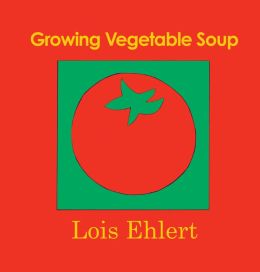
It's a Soup-er Garden!

Every summer, I host a container garden program on our library's patio. This summer, since our theme for the reading program is superheroes, why not have a soup garden?

I ran the program similarly to the Butterfly Garden program last year where we had different activity stations:

1. Container Planting: I had enough plants/seeds on hand for each child to get to plant at least one. For the soup garden, we planted:

  • Tomatoes - Roma, Red Grape, and Yellow Pear
  • Peppers - Green and Yellow
  • Nantz Carrots (seeds)
  • Zucchini
  • Broccoli
  • Burpless Cucumbers (seeds)
  • Blue Lake Green Beans
  • Onions - White and Yellow'
  • Spinach (seeds)
  • Basil
  • Thyme
  • Oregano


2. Rock Painting: Originally, I found this craft and desperately wanted to do it. But after reading the list of chemicals in ready-mix mortar and stepping stone mix (which are quite scary!) and after agonizing over other possible alternatives, I just decided to just let participants paint rocks that they could either take home or leave behind to decorate our library garden. I set a tarp down on the ground, filled some egg cartons with paint, and left the rest up to their imaginations!


3. Bagel Bird Feeders: All you need for this craft are some plain bagels, ribbon, birdseed, and Sunflower Seed Spread (which is safe for both birds and peanut butter allergies).


4. Plant Pals: Kids take a clear cup and decorate it with stickers or markers, add some potting soil, and sprinkle some grass seed on top. I found the stickers on Oriental Trading (nose and mouth stickers found here).


5. Snack/Story: As the families finished up with all of the activity stations, they could come over a get a snack. I provided grape tomatoes, baby carrots, celery sticks, and cucumber slices with ranch dip. (Note: the celery sticks were by far the least popular choice.) We also had cold glasses of water to drink. When the majority of them were having the snack, I read a story or two.

Here are some great choices when you need a vegetable-themed story:


In August, the plan is to have a harvest day where families can take home some vegetables after we enjoy some gazpacho. 

For more garden ideas, check out my gardening Pinterest board. Happy gardening!

Wednesday, June 17, 2015

Early Literacy Messages in Action: Find Your Style & Give Em' A Hand(out)!

The How:

Every children's librarian, whether new or seasoned, has heard about early literacy and how it's pretty much the foundation of what we do in storytimes. But while a lot of us might have the theory down pat, what about the practice?

I've been to trainings and read professional writings where the presenter will give a sentence-or-two-long literacy tip in between books/songs. The thought of doing it this way honestly made me a bit nervous. It didn't feel like my style. And frankly, I stressed out about it.

But the more I connected with other librarians on Twitter and at conferences and the like, I discovered that there were, in fact, other ways to do it. Thus, I learned how to plan my storytimes with a more "stealth" presentation for early literacy tips.

This is the method that I'm the most comfortable with. But please note that there's no one "right" way to do it. Just like everyone presents storytimes differently, the way we integrate early literacy can too.

Stealth literacy, for me, means that either before or after a book/song/rhyme I will quickly explain my reason for choosing it. Last year, Abby Johnson wrote a great blog post about the meaning behind our storytimes on the ALSC Blog . Being the experts that we are, there's a purpose for every single song, rhyme, activity that we do. So why not share our reasoning with the parents/caregivers? Then maybe they can choose books, songs, and activities to do at home with the same kind of purposefulness.

However, I don't put the pressure on myself to always share my reasoning at every session. I only do it when it feels natural. This helps me stay more confident and relaxed when presenting storytimes. But if it works for others to plan ahead of time, that's great as well!

Here are some examples of what I might say during storytime and which skill(s)/practice(s) they encompass:

"This book is great because it teaches your child the names of (colors, animals, etc.)." Vocabulary/Talking

"This book is one of my favorites and has big, bright illustrations that's perfect for sharing one on one with your child." Print Motivation/Print Awareness/Reading

"The song 'Apples and Bananas' is not only fun to sing, but it teaches your child all about different vowel sounds." Phonological Awareness/Singing

"When we do 'Open Shut Them' here in storytime, it helps your baby gain that skill of opening and closing their hands, which is an important fine motor skill." Writing (Holding a pencil/crayon/etc.)

"I love this interactive rhyme because you can add verses to it with your child if you like." Playing/Talking/Vocabulary/Singing

"Wordless books like this are wonderful because you can ask your child what's happening on each page and to help you tell the story." Narrative Skills/Reading

The Handouts:

I also love to give out handouts, with varying degrees of success. At some libraries where I've been employed, handouts have worked very well for me. At others...not so much. At my current job, my success even varies from session to session. At the very least, I like to have a brochure about early literacy available and depending on the crowd, I will make up a weekly handout.

Here is the early literacy brochure that we hand out to parents:


And here's an example of the handout I might make each week:


I try to include the rhymes/songs that we did that week so that parents can do them at home. I also take each of the early literacy skills/practices and think of an activity to pair with them.

The Help:

Here are some resources to help us hone our early literacy skills!


How do you incorporate early literacy into your library?


Tuesday, June 16, 2015

Display Space on the ALSC Blog

Today I'm over at the ALSC Blog talking about our awesome display case/space for kids. Check it out!

ShareThis